Projects
Most of what I build at work stays private. So over the years I've built things on my own time. A few shipped, a couple sold, and some are long gone. They're collected here, newest first.
Car Curious
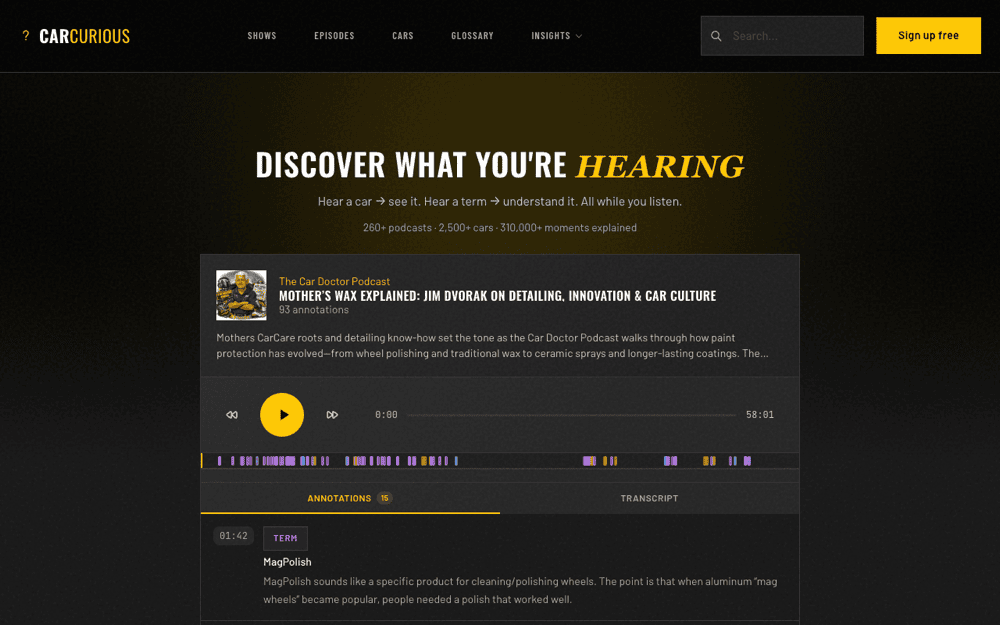
Car podcasts throw around models, brands, and jargon that lose anyone new to the hobby. Car Curious transcribes each episode and explains the cars and terms as they come up, across a web app, an iOS player, and written recaps.
Car Curious automotive podcast app
Lot Watch
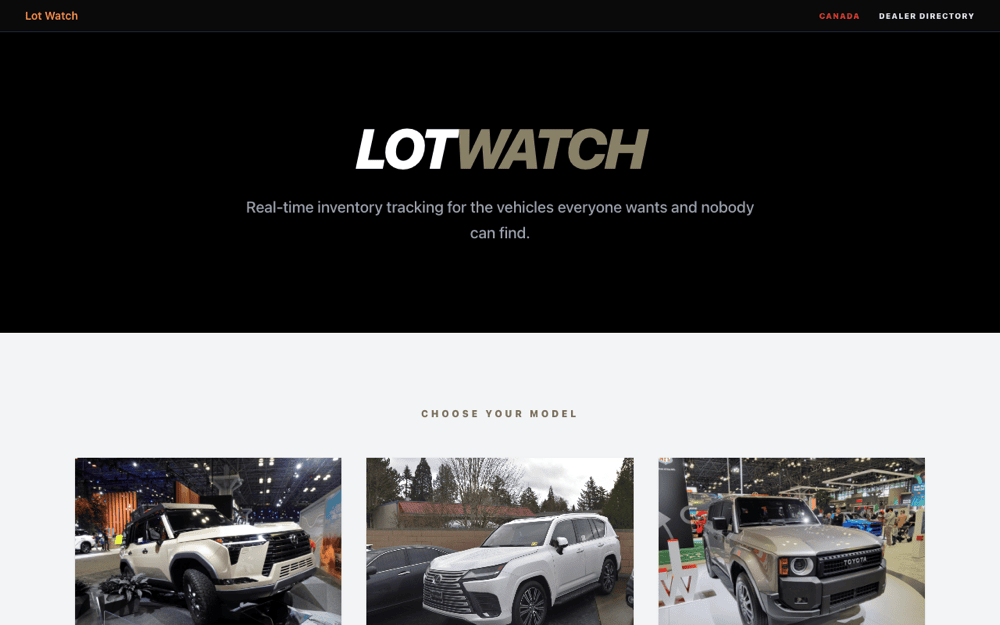
Some vehicles sell before they ever surface in a search. Lot Watch tracks dealer inventory in real time and flags when hard-to-find models like the GX 550 or Land Cruiser land on a lot, along with price and listing changes.
Lot Watch real-time dealer inventory tracker
Suspension.news
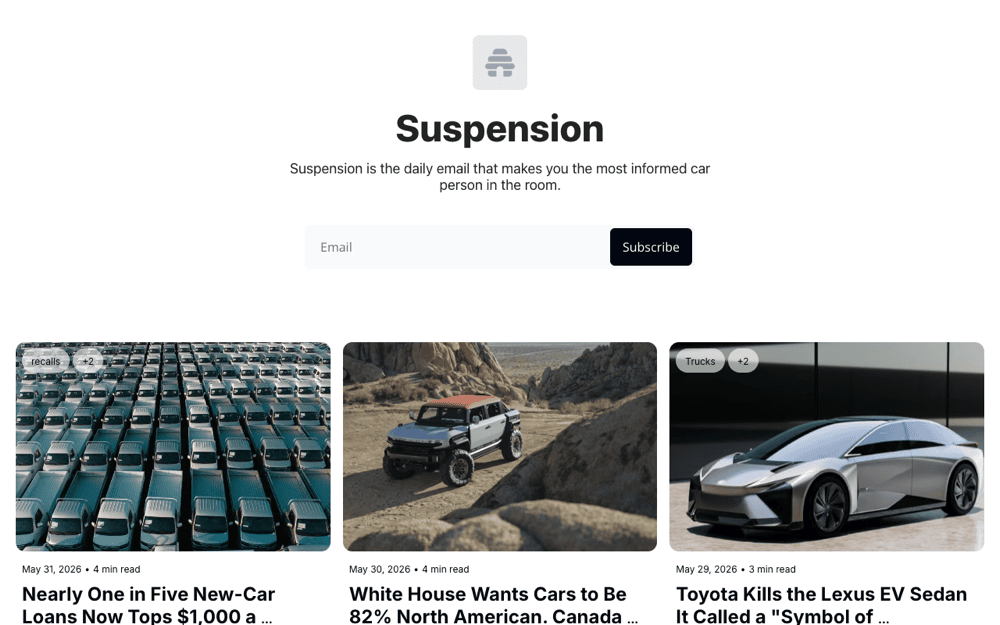
A daily email that rounds up the car news worth knowing, from new-car loan trends to the latest EV launches. The pitch: read it and be the most informed car person in the room.
Suspension.news daily car news email
Podcast Annotation Format
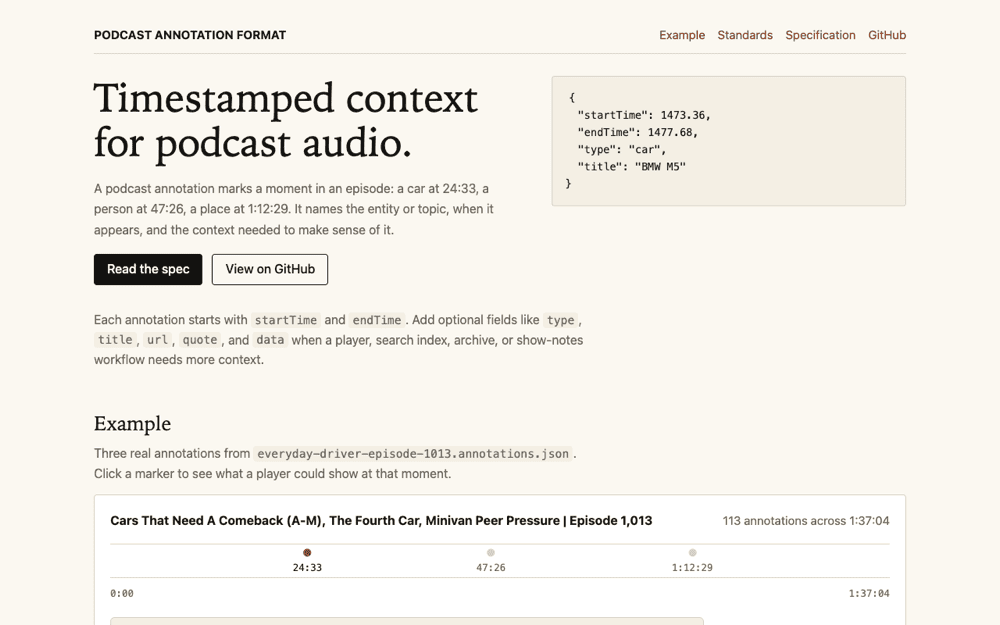
The open spec behind Car Curious. Each annotation marks a moment in spoken audio: the entity or topic, the second it appears, and the context to make sense of it. That lets players, search, and show notes point at a specific point in an episode.
Podcast Annotation Format specification for timestamped audio
Hacker News Hiring Trends
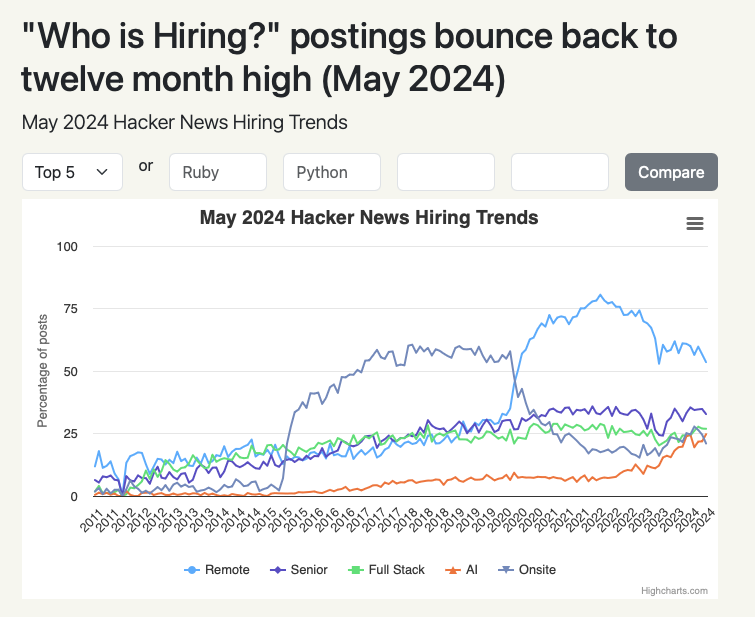
Built this API-driven data pipeline and analysis system for analyzing trends in software development technologies through Hacker News submissions.
Technologies Used:
Hacker News Hiring Trends source code on GitHub
Hacker News software hiring trends
ScoutZen
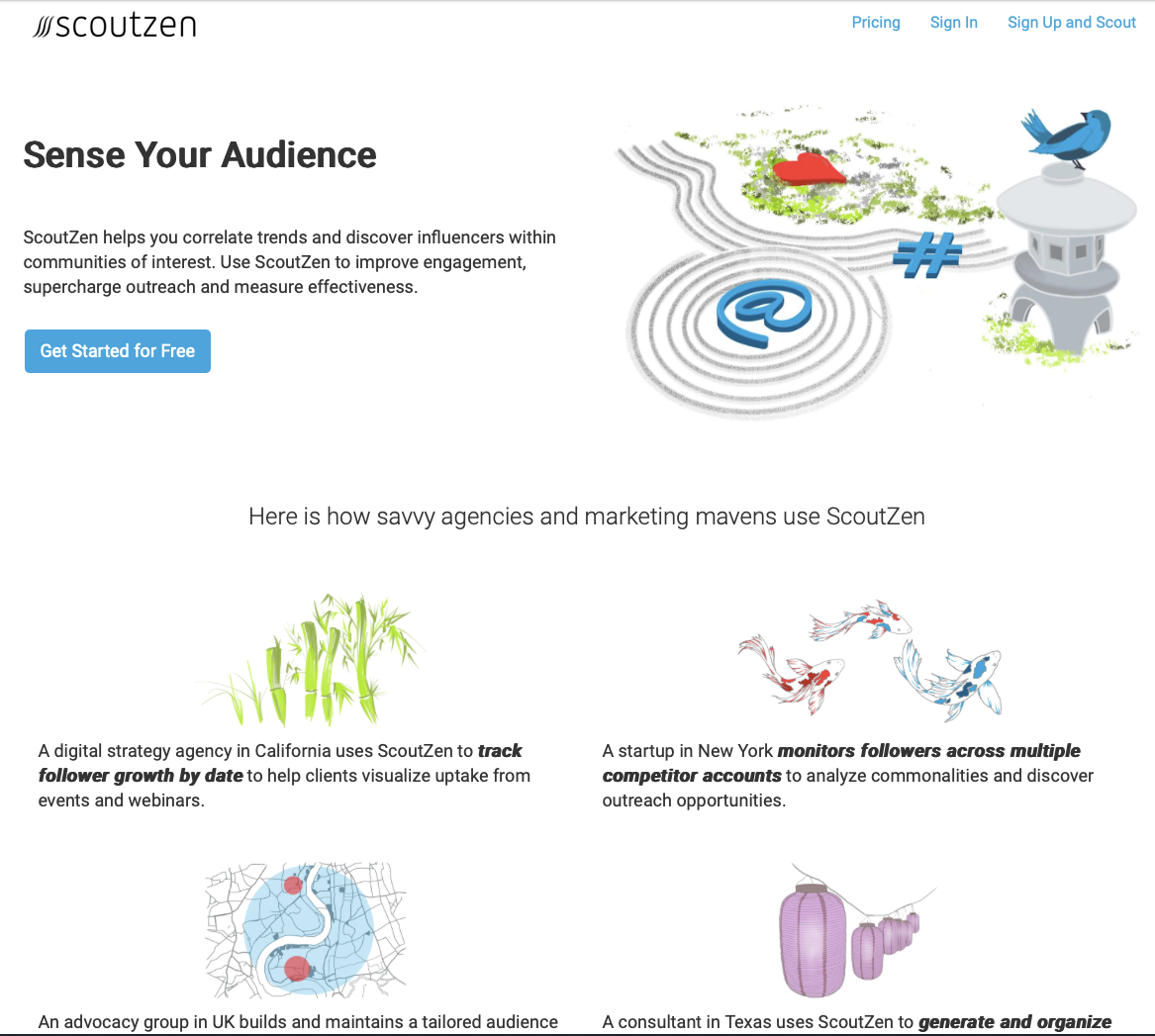
Scout the right people and communities, inform your interests. Use it to easily monitor Twitter hashtags, search for Twitter Lists. Co-developed this tool to continue to refine Twitter automation and discovery capabilities.
Technologies Used:
- Ruby on Rails
- PostgreSQL
- Sidekiq
- Twitter API
- jQuery
- Stripe
ScoutZen coverage on Social Media Examiner
Electoral
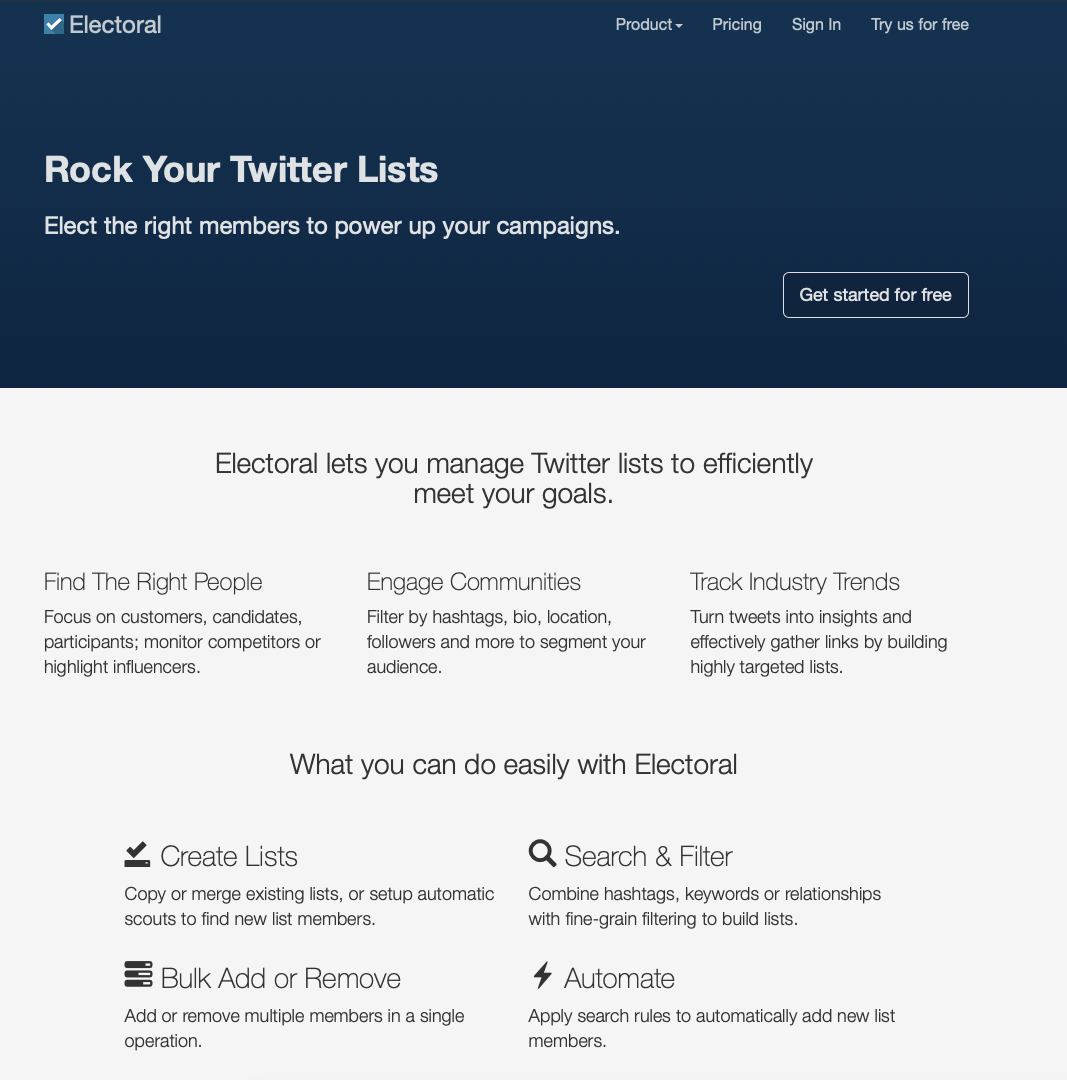
Electoral provided tools to quickly build powerful Twitter Lists to stay up to date on your interests and find the right people to listen to.
Technologies Used:
- Ruby on Rails
- PostgreSQL
- Sidekiq
- Twitter API
- jQuery
- Stripe
Electoral coverage on Lifehacker
Hawaii Here
A mobile web app I co-developed for Hawaiian Airlines. It leaned heavily on geolocation, mapping, geocoding, and distance calculations, pulling in Foursquare, Twitter, and Facebook data and keeping it in sync. Built on Rails, PostgreSQL, and jQuery Mobile.
Technologies Used:
- Ruby on Rails
- PostgreSQL
- Foursquare API
- jQuery Mobile
- Heroku
VentureMash
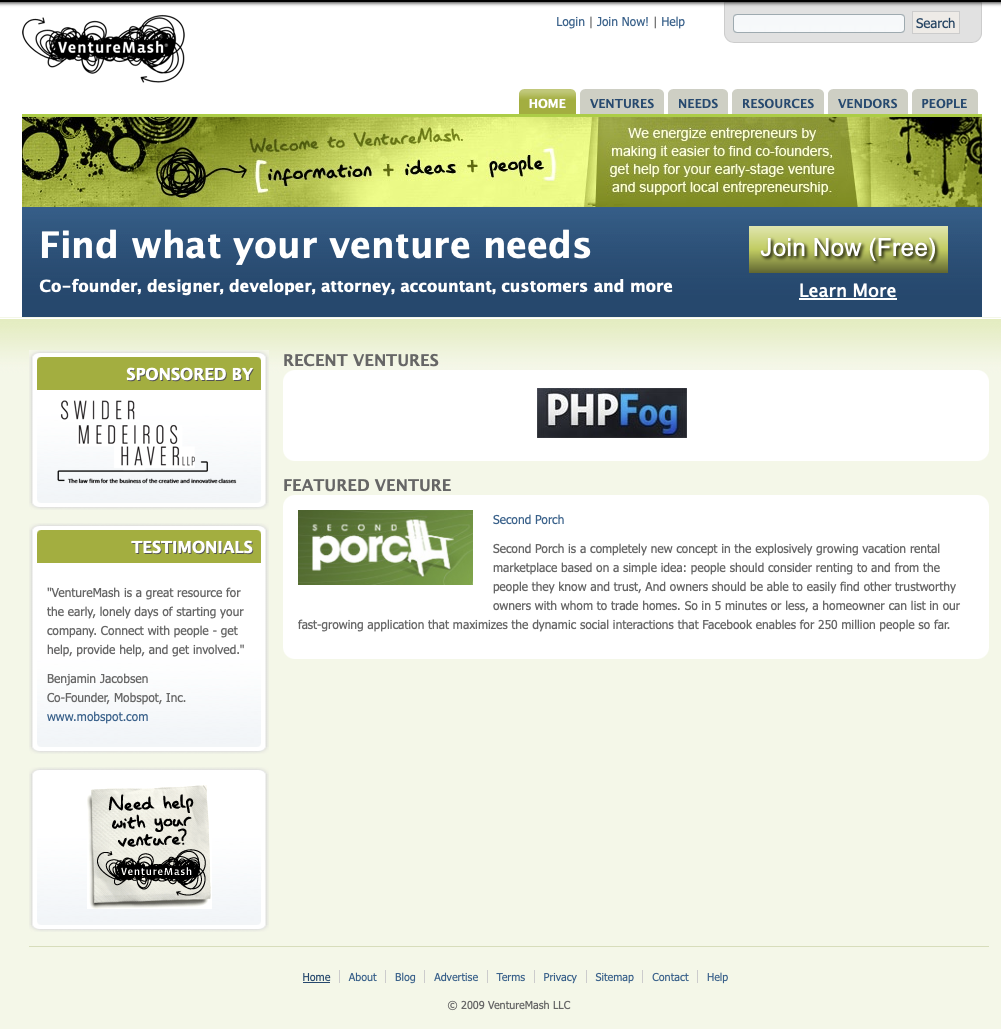
Energizing early stage startups.
Technologies Used:
VentureMash coverage on Silicon Florist
Local Signal
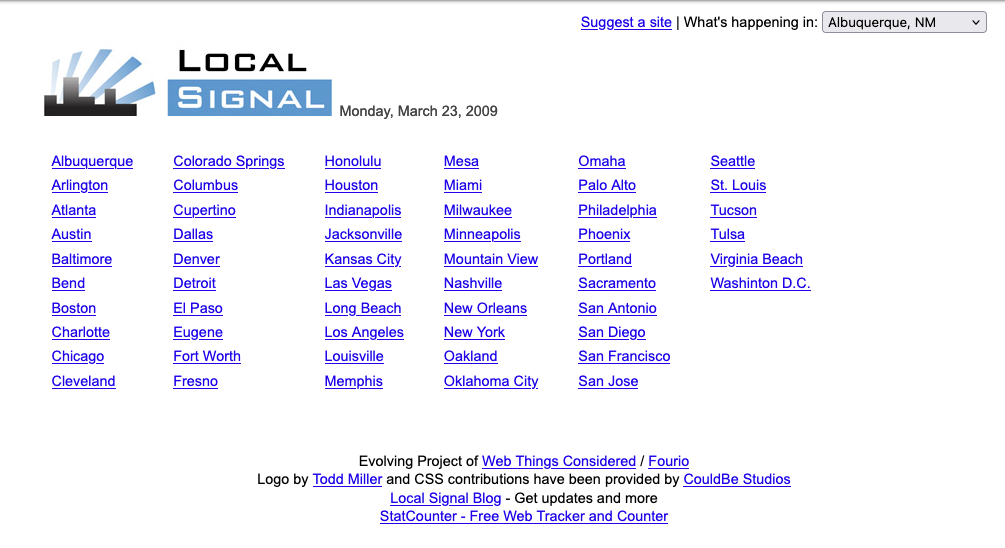
Local Signal was a city-based feed aggregator on the LAMP stack: one place to follow a town's news, events, and social media, from blog posts and bookmarks to photos and video. The feed engine parsed RSS at its core but also handled the custom formats various APIs returned, with dynamic content display built on the YUI library.
Technologies Used:
- PHP
- MySQL
- RSS/Atom
- JavaScript
Local Signal coverage on Silicon Florist
Web 2.0 Innovation Map
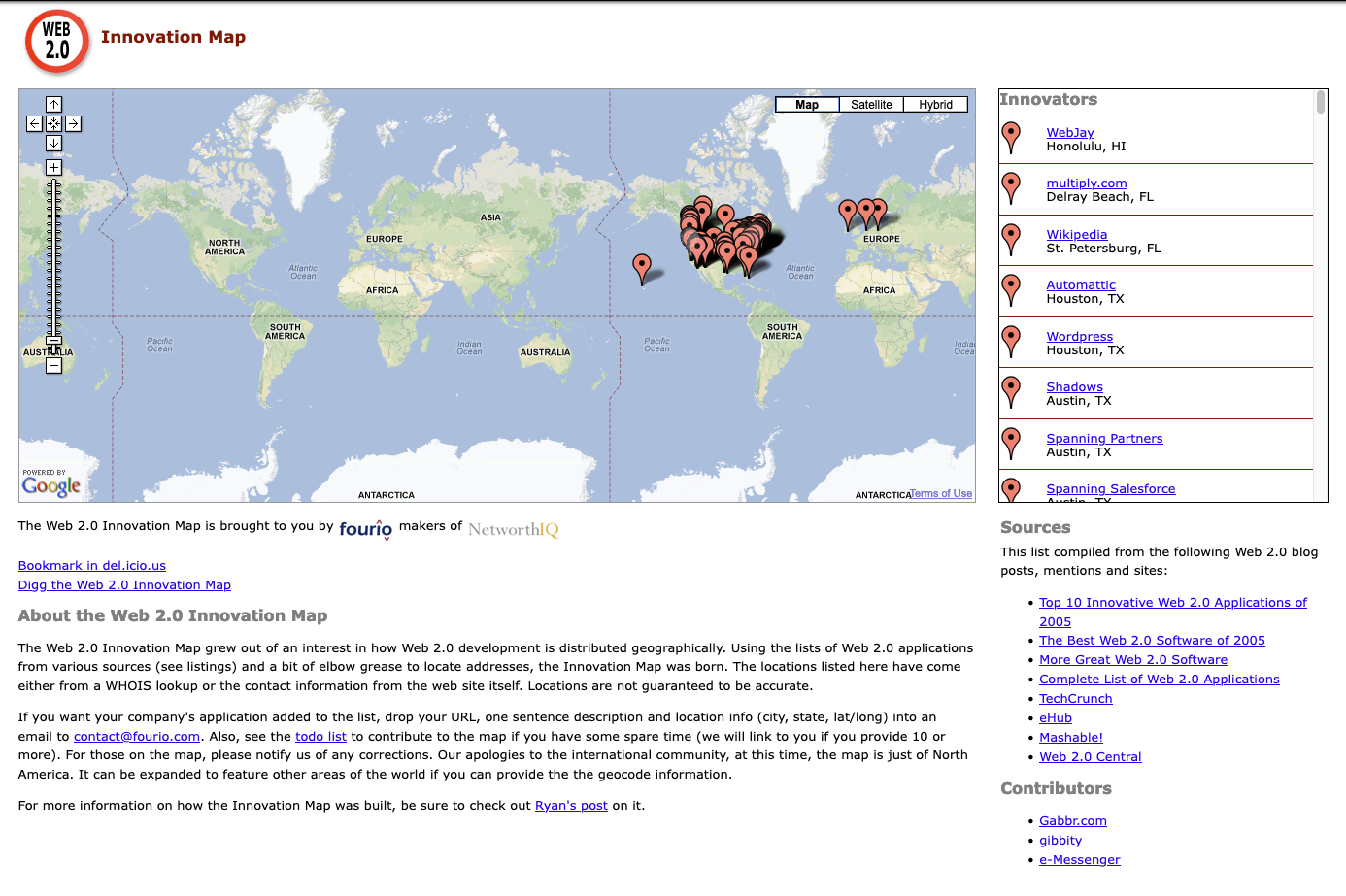
I developed this Google Maps mashup to highlight the explosion of new internet applications generally considered to be Web 2.0. This application was extremely popular, making the Digg front page and meriting mention by dozens of blogs. Technologies included JavaScript, XML, .NET, AJAX, the Google Maps API, and the Yahoo Geocoding API.
Web 2.0 Innovation Map coverage on O'Reilly Radar
Web 2.0 Innovation Map coverage on urenio.org
Web 2.0 Innovation Map coverage on Somewhat Frank
NetworthIQ (acquired by Strands in 2008)
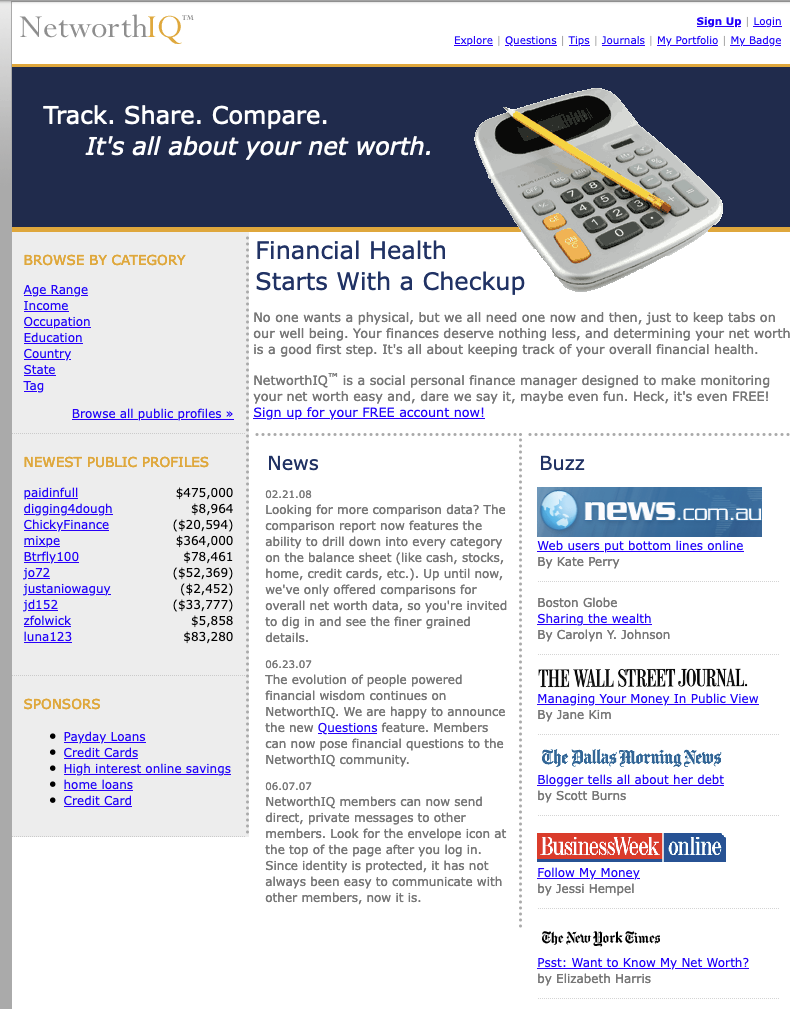
Co-founder and lead developer for this innovative social personal finance website launched in July 2005. NetworthIQ was built on ASP.NET/MySQL.
NetworthIQ grew to over 19,000 registered users and has been included in The Wall Street Journal,
The New York Times,
Washington Post,
Business Week,
Dallas Morning News, Boston Globe, and was in many "Top Web 2.0" lists.